Sarah is a nurse in Manchester. She washes her uniform at home every week, has done so for six years, and never once thought to claim anything back for it. Turns out she’d been leaving money on the table the whole time.
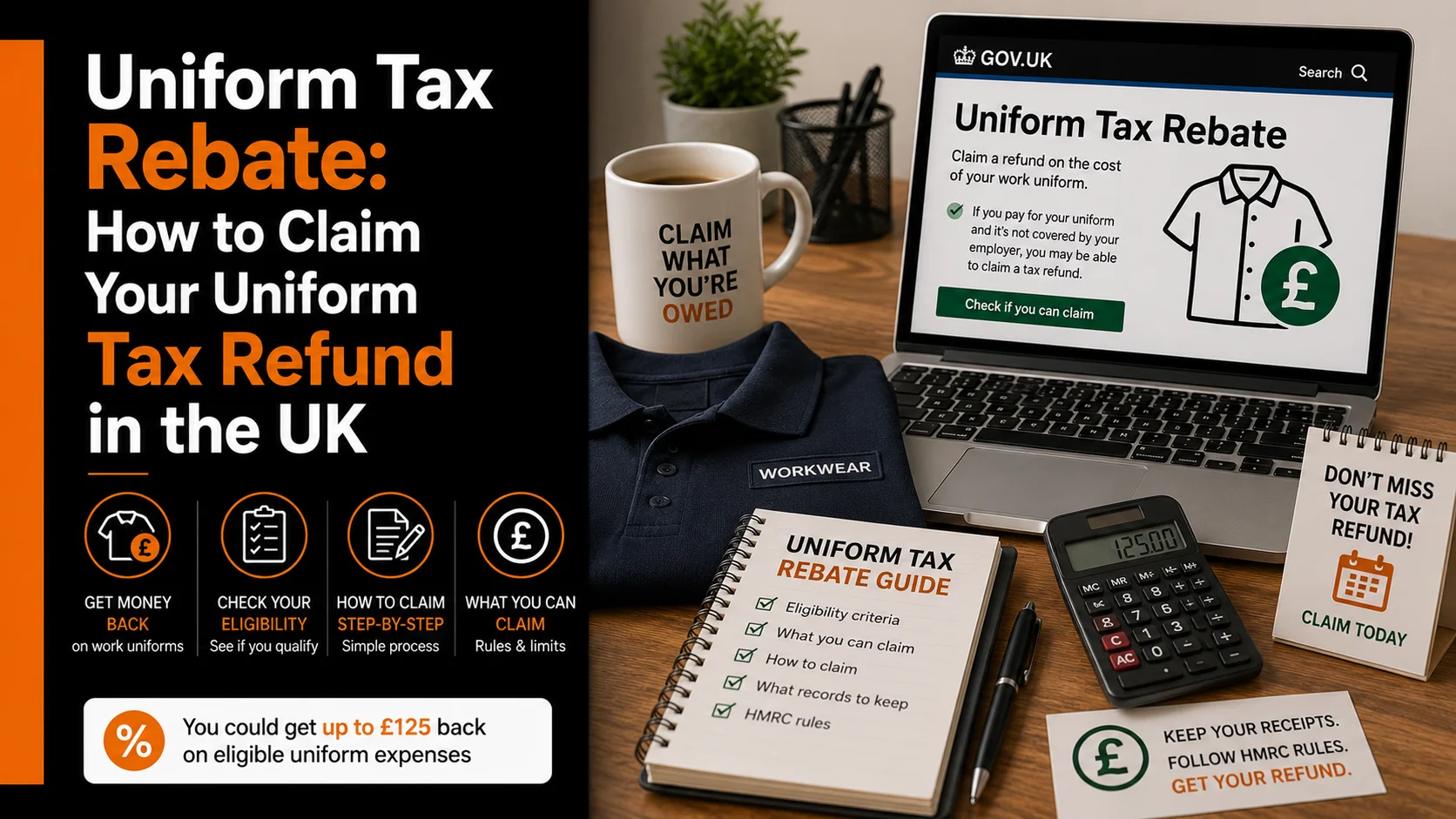
A uniform tax rebate lets you claim tax relief for the cost of washing, repairing, or replacing a required work uniform, provided your employer isn’t already covering it. HMRC administers the scheme directly, and thousands of eligible workers simply never get around to claiming.
This guide covers who qualifies, exactly how much you can expect back, the claim process step by step, and the mistakes that trip people up along the way.
What Is a Uniform Tax Rebate?
It’s tax relief, not a cash handout. HMR reduces the income you’re taxed on rather than sending you a random cheque out of nowhere. Claim successfully, and less of your salary gets taxed each year going forward.
Tax relief and tax refund get used interchangeably, though they’re technically different. The relief itself lowers your taxable income; the refund is what actually lands in your bank account once that relief gets applied, either as a lump sum for past years or through your ongoing tax code.
The logic behind HMRC’s uniform tax allowance is straightforward. If your job requires a specific, recognisable uniform and your employer doesn’t cover maintenance, you’re personally footing a bill that exists purely because of your work. Most PAYE employees never file a Self Assessment return, so uniform tax relief typically gets claimed through a separate HMRC form instead. Once approved, HMRC usually folds the allowance directly into your tax code, meaning you keep receiving it automatically each year without reclaiming.
Who Can Claim a Uniform Tax Rebate?
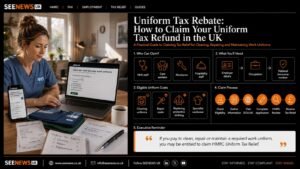
Three conditions need to line up. Your uniform must be recognisable as work-specific, you must pay for its upkeep yourself, and your employer mustn’t already reimburse you for that cost.
A branded polo shirt, a nurse’s tunic, a chef’s whites, a high-vis jacket with a company logo anything that clearly identifies your job or employer qualifies. It doesn’t need a full corporate branding package, just something recognisably tied to your role. Plain black trousers for a waiter, a suit for an office job, or generic smart-casual wear doesn’t count, even if your employer insists on it. HMRC draws a firm line between a genuine uniform and ordinary clothing you’d own anyway.
A wide range of jobs qualify for hmrc uniform tax relief, including:
- Nurses and healthcare workers
- Carers
- Police officers and firefighters
- Mechanics, builders, and electricians
- Chefs and hospitality staff
- Hairdressers, security guards, and warehouse workers
Quick eligibility checklist:
- ✔ My uniform is recognisable as work-specific
- ✔ I wash, repair, or replace it myself
- ✔ My employer doesn’t reimburse these costs
- ✔ I’m employed under PAYE, not self-employed
What Expenses Can You Claim For?
The most common hmrc uniform laundry allowance claim covers washing costs, calculated as a flat annual figure rather than itemised receipts. Repairs mending seams, replacing buttons fall under that same allowance, as does buying a full replacement uniform yourself without employer reimbursement.
Genuine PPE required for safety, like steel-toe boots or hi-vis gear you’ve personally purchased, can sometimes be claimed separately. Most people use the flat-rate route since it needs no receipts at all; if your actual costs run noticeably higher than the standard tax uniform allowance, you can claim the real amount instead, but that route requires proper records.
Who Cannot Claim?
Self-employed workers generally sit outside this specific scheme, since it’s built around PAYE claims self-employed uniform costs get handled through Self Assessment expenses instead. Employees whose employer pays all costs aren’t eligible either, since the relief exists to cover an expense you’re personally bearing.
Ordinary business clothing never qualifies, no matter how strict the dress code, and a general office dress code requiring “smart attire” doesn’t count as a uniform under HMRC’s definition either.
How to Claim Your Uniform Tax Rebate?
Gather these before starting:
- National Insurance number
- Employer details (name and PAYE reference)
- Your occupation
- The relevant tax year or years you’re claiming for
Step-by-step process:
- Confirm you meet the eligibility criteria
- Check your occupation’s flat-rate allowance on GOV.UK
- Complete form P87, online or by post
- Submit your claim, including any prior years you’re backdating
- Wait for HMRC to review and confirm
Claiming online through your Government Gateway account tends to process faster than a posted paper form, though post remains an option if you’d rather not set up online access.
Should you use a tax rebate company? Usually not necessary. The claim uniform tax rebate process through HMRC directly costs nothing, while third-party companies typically take a cut of whatever you’re owed for doing exactly the same paperwork.
How Much Can You Claim?
The baseline uniform tax refund sits at £60 a year for most eligible occupations; the standard flat rate uniform allowance is £60. Some occupations get significantly more certain healthcare roles claim £125, trades like blacksmiths reach £140, and pilots or uniformed flight crew can claim as much as £1,022 a year.pilots and uniformed flight deck crew can get rebates for as much as £1,022.
You don’t receive the flat-rate figure as cash, you receive relief calculated at your marginal tax rate. Basic-rate taxpayers get 20% of the allowance back, higher-rate taxpayers get 40% basic-rate taxpayers get 20% of their industry’s qualified deductions as a rebate, whilst higher-rate taxpayers get 40%</cite>. A nurse claiming the standard £125 healthcare allowance at basic rate receives £25 annually; the same claim at higher rate returns £50 instead.
Can You Backdate a Uniform Tax Rebate?
Yes, and this is where a first-time claim often becomes genuinely worthwhile. HMRC allows backdating for up to four previous tax years on top of the current one, meaning five years total you can backdate claims for up to four tax years. Each tax year has its own cutoff for backdating eligibility, so waiting too long means losing access to older years permanently.
Changed jobs since then? You can still claim for uniform costs from a previous employer, provided the role genuinely qualified at the time.
What Happens After You Submit Your Claim?
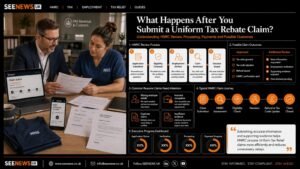
HMRC checks your occupation against its published flat-rate list and confirms your eligibility before processing further. This generally takes several weeks, sometimes longer during busier periods, with online claims typically moving faster than posted forms.
Backdated years usually arrive as a lump sum, either by cheque or bank transfer. The current and future tax years get built directly into your ongoing tax code instead, meaning you continue receiving the relief automatically each year without submitting a fresh claim.
Common Problems and How to Solve Them?
A rejected claim usually means your occupation doesn’t match HMRC’s eligible list, or your uniform doesn’t meet the “recognisable” test. Missing your National Insurance number? Contact HMRC directly they can usually verify your identity through other records.
If your employer already reimbursed the cost, you can’t claim relief for that same expense. An incorrect tax code after your claim’s processed just needs a call to HMRC to correct. And if processing seems delayed, check your claim status online rather than submitting a duplicate application, which typically just slows things down further.
Common Misconceptions About Uniform Tax Rebates
Not all work clothes qualify, only genuinely recognisable uniforms do, so business suits never count regardless of how formal the dress code. Not everyone gets the same refund either, since it depends entirely on occupation and tax rate.
You don’t need to keep every laundry receipt for flat-rate claims, HMRC doesn’t charge a fee for claiming directly, and you’re never required to use a claims company. An employer-provided uniform doesn’t automatically block your claim if you still personally cover its maintenance.
HMRC Direct Claim vs Tax Rebate Companies
| Feature | Claim Directly Through HMRC | Tax Rebate Company |
| Cost | Usually free | Often charges a fee or commission |
| Process | Direct with HMRC | Company submits on your behalf |
| Refund | Full eligible amount | Eligible amount minus agreed fees |
| Best for | Most straightforward claims | People who prefer hands-off assistance |
For most people, claiming directly is simply the better deal, same paperwork, same outcome, without handing over a percentage.
Common Mistakes to Avoid
- Claiming for ordinary work clothes that aren’t genuine uniforms
- Claiming after your employer’s already reimbursed you
- Choosing the wrong occupation category on the form
- Missing HMRC’s backdating deadlines
- Paying unnecessary commission to a claims company
- Confusing tax relief with a straightforward cash grant
- Assuming receipts are always required, even for flat-rate claims
Frequently Asked Questions
What is a uniform tax rebate, exactly?
It’s HMRC’s way of offsetting the cost of washing, repairing, or replacing a required work uniform you pay for yourself. Rather than a direct payment, it works by reducing your taxable income, either through a backdated lump sum or an adjustment to your ongoing tax code.
How much money will I actually receive?
The amount depends on your occupation’s flat-rate allowance and your tax bracket, since you receive relief at 20% or 40% of the allowance rather than the full figure. A standard £60 allowance nets a basic-rate taxpayer around £12 a year, while specialist occupations return considerably more.
Do I need receipts to make a claim?
Flat-rate claims don’t require receipts, since HMRC has already agreed these figures represent reasonable typical costs across each occupation. Receipts only become necessary if your actual expenses genuinely exceed the flat rate and you want to claim the higher real amount.
Can I claim it if my employer already supplied my uniform?
Being provided with a uniform doesn’t automatically disqualify you, since the real question is who covers ongoing maintenance like washing and repairs. If you’re still paying to keep that provided uniform clean yourself, you can generally still claim relief for that upkeep.
Will HMRC contact my employer about my claim?
HMRC verifies your employment and occupation details internally through its own records rather than reaching out to your employer directly. Your employer typically has no involvement and won’t be notified that you’ve made a claim.
Final Thoughts
Checking whether you qualify for a work uniform tax rebate takes a few minutes and can genuinely add up, especially once backdated years get factored in. Claim directly through HMRC where you can, skip the unnecessary commission a claims company would take, and keep basic records even if receipts aren’t strictly required.
Seenews will keep you posted on HMRC rule changes and allowance updates as they happen, so understanding the rules properly, and claiming within the right deadlines, means you’re not leaving money sitting with HMRC that was always yours to begin with.