Introduction
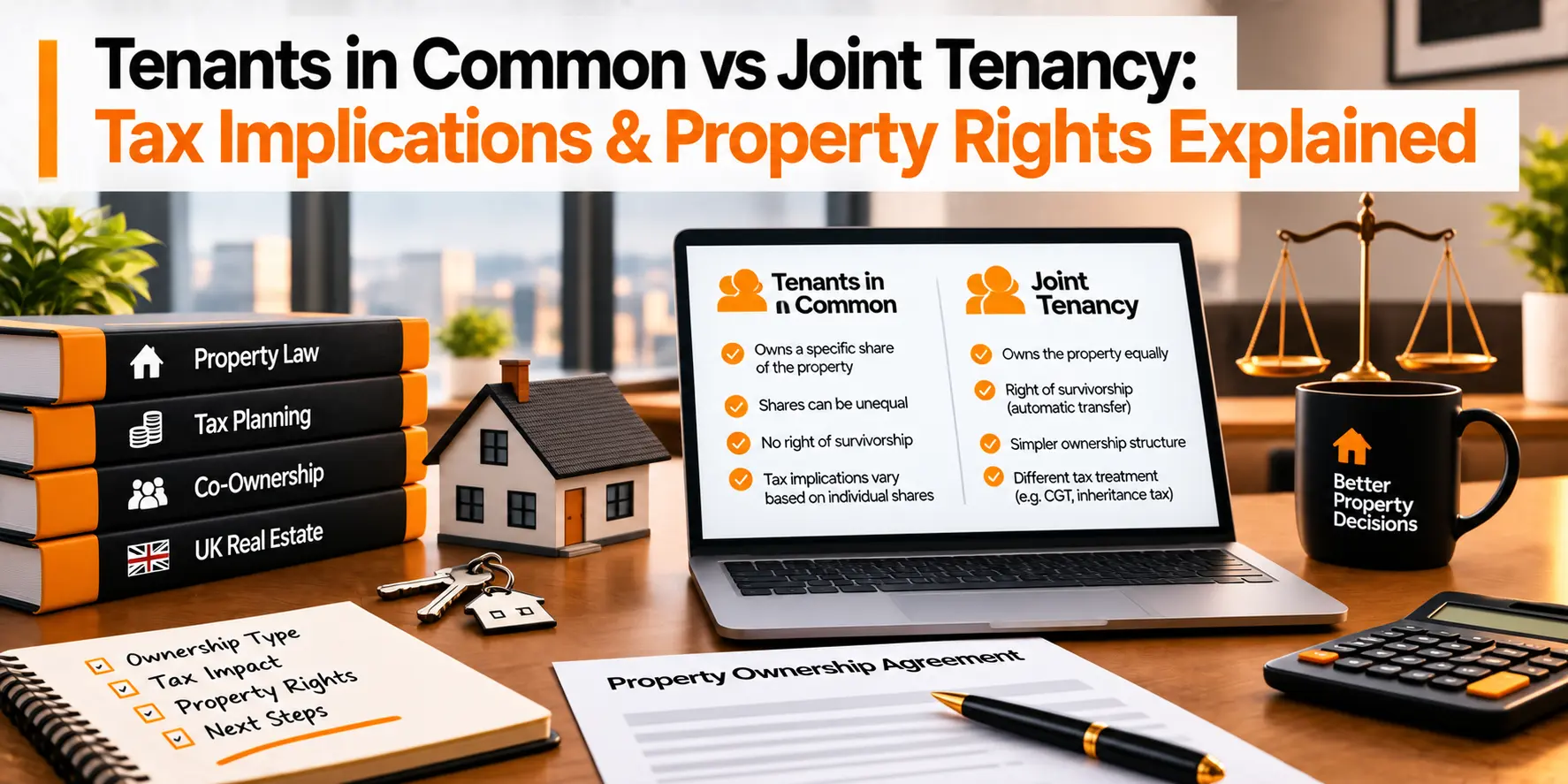
Buying a property with someone else means picking how you’ll legally hold it. Most people barely think about this step. Get it wrong, and the fallout can show up years later. Often at the worst moment, like a death or a split.
The tenants in common definition matters here. It’s one of two routes UK co-owners can take. The choice affects far more than paperwork.
It shapes who inherits what. It affects tax. It decides what happens if one owner dies, or if the relationship ends. The other route, joint tenancy, runs on different rules entirely. This guide covers both, the tax position for each, and where one tends to fit better.For more on UK property and tax topics, see our guides section.
What Do Tenants Have in Common?
Each owner holds a distinct, defined share of the property. That share can be sold. It can be left in a will. It can be passed on separately from the other owner’s share.
How Tenants in Common Works?
Each co-owner holds a separate beneficial interest. These tenants in common arrangements let shares be equal or unequal. Each owner’s beneficial interest tenants in common reflects what they actually put in, or agreed to.
When the property sells, proceeds split by those recorded shares. Not automatically down the middle. Skip a formal record, and arguments over who owns what tend to follow.
Can Tenants in Common Have Unequal Shares?
Yes. Tenants in common unequal shares are common. Especially where one buyer put in a bigger deposit. A couple might split 50/50. Or one partner who paid 70% of the deposit might hold a 70/30 share instead.
A tenants in common deed puts this split in writing. Usually a declaration or deed of trust. Skip it, and work out who’s owed what later gets messy fast. Especially once memories of who paid what started to differ.
Legal Ownership vs Beneficial Ownership
Legal ownership is the name on the Land Registry title. Beneficial ownership is who actually benefits financially. Who gets the proceeds? Who’s entitled to rental income.
These two can differ. Two people might hold legal titles jointly while their beneficial interests sit unevenly underneath, recorded through a trust rather than the title itself.
What Is Joint Tenancy?
Here’s a simple joint tenancy definition. Joint tenants own the whole property together, with no individual shares. Both own everything, together.
How Joint Tenancy Works?
Joint tenants equal ownership is the defining feature. There’s no 60/40 split under joint tenancy. Both parties own the entire property equally, by definition. The arrangement also carries joint tenants survivorship. When one owner dies, their interest doesn’t pass through a will. It transfers straight to the survivor.
What Happens When a Joint Tenant Dies?
Survivorship sends the property directly to the surviving owner. The deceased’s estate never gets involved. This sidesteps joint tenants death probate complications for the property itself, since it was never part of the deceased’s estate.
Tenants in common work differently. A deceased owner’s share forms part of their estate. It gets dealt with under their will. Or under intestacy rules, if there isn’t one.
Tenants in Common vs Joint Tenancy: Key Differences
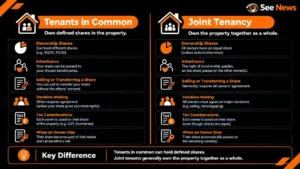
Property ownership joint vs common comes down to a few practical differences:
| Tenants in Common | Joint Tenancy | |
| Ownership shares | Defined, can be unequal | No individual shares |
| On death | Passes via will/intestacy | Passes by survivorship |
| Inheritance flexibility | High share can go to anyone | Low automatically to survivor |
| Suited to | Unequal contributions, blended families | Couples wanting simplicity |
| Relationship breakdown | Shares can be bought out or sold | Must be severed first to divide |
Neither structure wins outright. It depends on how the owners contributed. What they want to happen on death. How they’d handle a future split.
What Are the Tax Implications of Each Ownership Structure?
Tenants in Common and Tax
The main tenants in common tax implications come from the split itself. Rental income from a property held as tenants in common is generally taxed by each owner’s beneficial share. Not split 50/50 regardless of who owns what.
Capital Gains Tax on sale works the same way. Tenants in common HMRC reporting need to reflect actual ownership percentages, not assumptions. Get this wrong on a return, and it can cause real problems later.For the underlying rules on reporting property income and gains, our HMRC section covers the detail in plain language.
Joint Tenancy Tax Treatment
Joint tenancy tax treatment generally assumes equal shares. That follows from how the structure works. Joint tenancy property tax on rental income or gains typically splits evenly between owners.
Joint tenancy doesn’t automatically beat tenants in common on tax. The right structure depends on individual circumstances. Not on one route being cheaper by default.
Inheritance Tax
People often mix up survivorship with Inheritance Tax. But tenants in common IHT implications and joint tenancy inheritance tax are separate issues. Survivorship decides who legally receives the property. Inheritance Tax looks at the deceased’s whole estate, including their beneficial share, regardless of how it passes.
A jointly held property passing by survivorship can still count toward the deceased’s taxable estate for IHT purposes. Spouse and civil partner exemptions generally cover transfers whether the couple held the property as joint tenants or tenants in common. The wider estate and available reliefs matter more than the label on the ownership.
Stamp Duty and Property Transfers
Choosing tenants in common doesn’t, on its own, create a tenants in common stamp duty bill. Stamp Duty Land Tax gets triggered by particular transactions. Buying a share, say, or taking on mortgage debt as part of a transfer. Not by the label itself.
Transferring a share between co-owners can potentially trigger SDLT. This can happen during a relationship breakdown, depending on the consideration involved, such as taking on part of an existing mortgage. Get advice before assuming any transfer is tax-neutral.If you’re weighing up how a transfer or sale affects your wider finances, our finance section covers broader money-planning topics that may help.
What Happens When One Owner Dies?
Tenants in Common Death and Inheritance
Tenants in common death means the deceased’s beneficial share joins their estate. Tenants in common inheritance then follow their will. Or intestacy rules, if there’s no will. The share can go to children, a new partner, or anyone else named.
Joint Tenants, Death and Probate
With joint tenancy, the surviving owner typically takes full ownership automatically. Joint tenants death probate for the property itself is usually simple. Survivorship skips the need to deal with that asset through probate in the normal way.
Can a Tenant in Common Leave Their Share to Their Children?
Generally, yes. That’s one of the structure’s biggest draws. For blended families, or anyone with children from an earlier relationship, tenants in common let a parent’s share go to their own children. Not automatically to a surviving partner.
What Happens If Owners Separate or Divorce?
Tenants in Common and Relationship Breakdown
Tenants in common relationship breakdown situations usually come down to the recorded shares. Whoever contributed what, as set out in a deed of trust, typically decides the split on sale or buyout.
Joint Tenants and Divorce
Joint tenants divorce property matters sit apart from the mechanics of joint ownership itself. Divorce proceedings run through family law. Family law can override the usual ownership rules. Being tenants in common doesn’t automatically shield a share from being redistributed during divorce.
Cohabiting Couples and Property Ownership
Unmarried couples don’t get the legal protections marriage provides. Clear documentation matters more here. A joint tenants cohabitation agreement, or an equivalent declaration of trust, can head off disputes if the relationship ends.
What Are the Legal Rights and Obligations of Co-Owners?
Tenants in Common Legal Rights
Tenants in common legal rights include occupying the whole property despite owning just a share, and having that share recognised on sale. Agreements often cover what happens if one owner wants to sell and the other doesn’t.
Joint Tenants Legal Obligations
Joint tenants legal obligations include sharing responsibility for property costs and mortgage payments. That applies regardless of how much time each owner actually spends there.
Joint Tenants Mortgage Implications
Joint tenants mortgage implications sit apart from ownership structure. Being named on a mortgage creates liability for the debt. That’s a separate question from how beneficial ownership is split.If a mortgage sits alongside salaried income, our take-home pay calculator can help you work out what’s actually left over each month to cover it.
How Can You Change From Joint Tenants to Tenants in Common?
What Is Severance of Joint Tenancy?
Tenants in common severance is the legal process that turns a joint tenancy into a tenancy in common. Once severed, each owner holds a distinct share. Typically equal, unless they’ve agreed to split it differently.
How to Serve a Joint Tenancy?
How to sever joint tenancy usually starts with serving a written joint tenancy severance notice on the other owner. This falls under the Law of Property Act 1925. HM Land Registry then needs a tenants in common notice of severance. This comes alongside an application, Form SEV, to register a Form A restriction. There’s no fee for this directly with the Land Registry.
What Happens After Severance?
Changing to tenants in common means survivorship no longer applies. Each owner’s share now passes under their will. Not automatically to the other owner. That makes reviewing your will straight afterwards genuinely important.
Why Does Ownership Structure Matters?(Wills and Estate Planning)
Tenants in Common and Wills
A tenants in common will can direct a specific share to chosen beneficiaries. That’s because the share forms part of the owner’s estate.
Joint Tenancy and Will Planning
Joint tenancy will planning needs to account for survivorship. A will typically can’t override the automatic transfer to a surviving joint tenant. This catches out people who assume their will controls everything they own.
Retirement and Long-Term Planning
Tenants in common retirement planning often factor property into wider estate planning. This matters particularly for second marriages, or anyone wanting specific children to inherit a defined share.
Common Misconceptions About Joint Tenancy and Tenants in Common
Joint ownership always means 50/50.Only joint tenancy guarantees equal shares. Tenants in common can split however the owners agree.
Tenants in common means I own a physical part of the house. Nobody owns a specific room. The share is a percentage of the property’s value.
Tenants in common automatically reduce Inheritance Tax. The structure changes who inherits. Not automatically how much tax is due.
Joint tenancy means there is no Inheritance Tax. The property can still count toward the deceased’s taxable estate.
A will always decide who receives your property share. Not under joint tenancy. Survivorship takes precedence there.
The person who paid more automatically owns more. Without a declaration of trust, contributions don’t automatically translate into unequal ownership.
Changing to tenants in common automatically saves tax. Severance changes inheritance and flexibility. Not automatically the tax bill.
Which Ownership Structure Might Be Relevant to Different Situations?
Unmarried couples get no automatic legal protection. A documented tenants-in-common split is usually worth considering here. Tenants in common marriage arrangements can suit married couples too. Particularly where children from earlier relationships are involved.
For couples with children from previous relationships, tenants in common often fit better. It lets each parent’s share pass to their own children, not a stepparent. Owners who put in unequal amounts benefit from a declaration of trust. It protects whoever contributed more, should the relationship end.
Buy-to-let owners often pick tenants in common to split rental income tax-efficiently, based on actual shares. Friends or family buying together need clear documentation even more. There’s no family law safety net underneath them.
Conclusion
Joint tenancy and tenants in common solve the same problem in very different ways. Both deal with owning property alongside someone else. Joint tenancy keeps things simple through equal ownership and automatic survivorship. Tenants in common offers flexibility through defined, individually transferable shares.
The consequences reach into tax, inheritance, wills, rental income, and what happens if a relationship ends. Neither structure suits every situation. The right choice depends on individual circumstances, contributions and intentions. Given how much rests on this decision, getting professional legal or tax advice before settling on a property ownership structure is generally sensible. Resources like Seenews can help readers work out the right questions to ask before they get there.