Picture an operative whose licence runs out in February 2027. They plan to renew it the way they did three years ago. Then they find the rules have changed. SIA close protection refresher training is now part of renewing a Close Protection licence, and it catches people out. This guide explains what it is, when it became mandatory and what to check before you book. For more on staying compliant, browse our guides section.
What Is SIA Close Protection Refresher Training?
It’s a short qualification that keeps licensed operatives sharp. It focuses on skills that fade fast without practice, such as physical intervention, searching and threat awareness.
It doesn’t replace your original Close Protection qualification. You still need that. The refresher sits on top of it and comes round again at each renewal.
Some operatives did “top-up” training after the SIA updated the qualifications in April 2022. That was a one-off bridge from an older standard to a newer one. The refresher is different because it repeats.
When Did the New Refresher Requirement Start?
Two dates matter, and people often mix them up.
- 1 October 2025: the refresher qualification became available.
- 1 April 2026: it became mandatory for Close Protection licence renewal.
That gap gave operatives about six months to plan. Door supervisors and security guards had a similar run-in before their own refresher became mandatory in April 2025.
The deadline has now passed. Anyone renewing today needs the refresher before they apply.
Who Needs Close Protection Refresher Training?
Anyone renewing a front-line Close Protection licence, now that the requirement is mandatory. Experience doesn’t change that. Ten years on the circuit still means you need the refresher.
Existing Close Protection Licence Holders
Plan early. Providers are taking bookings now. Leaving it until a month before expiry is risky, because courses fill up and your first aid may need renewing too.
What If You Completed Close Protection Top-Up Training?
Top-up training doesn’t exempt you. It solved a different problem. It brought older qualifications up to the 2022 standard. The refresher keeps skills current from here on.
What If Your SIA Licence Has Already Expired?
Renewing a live licence isn’t the same as applying for a new one. A renewal sent in on time keeps your record continuous. A lapsed licence can mean starting again. If you’re unsure where you stand, ask the SIA directly.
These close protection operative requirements are easy to miss when you’re busy working. Check them early.
What Qualifications Do You Need Before Taking the Refresher?
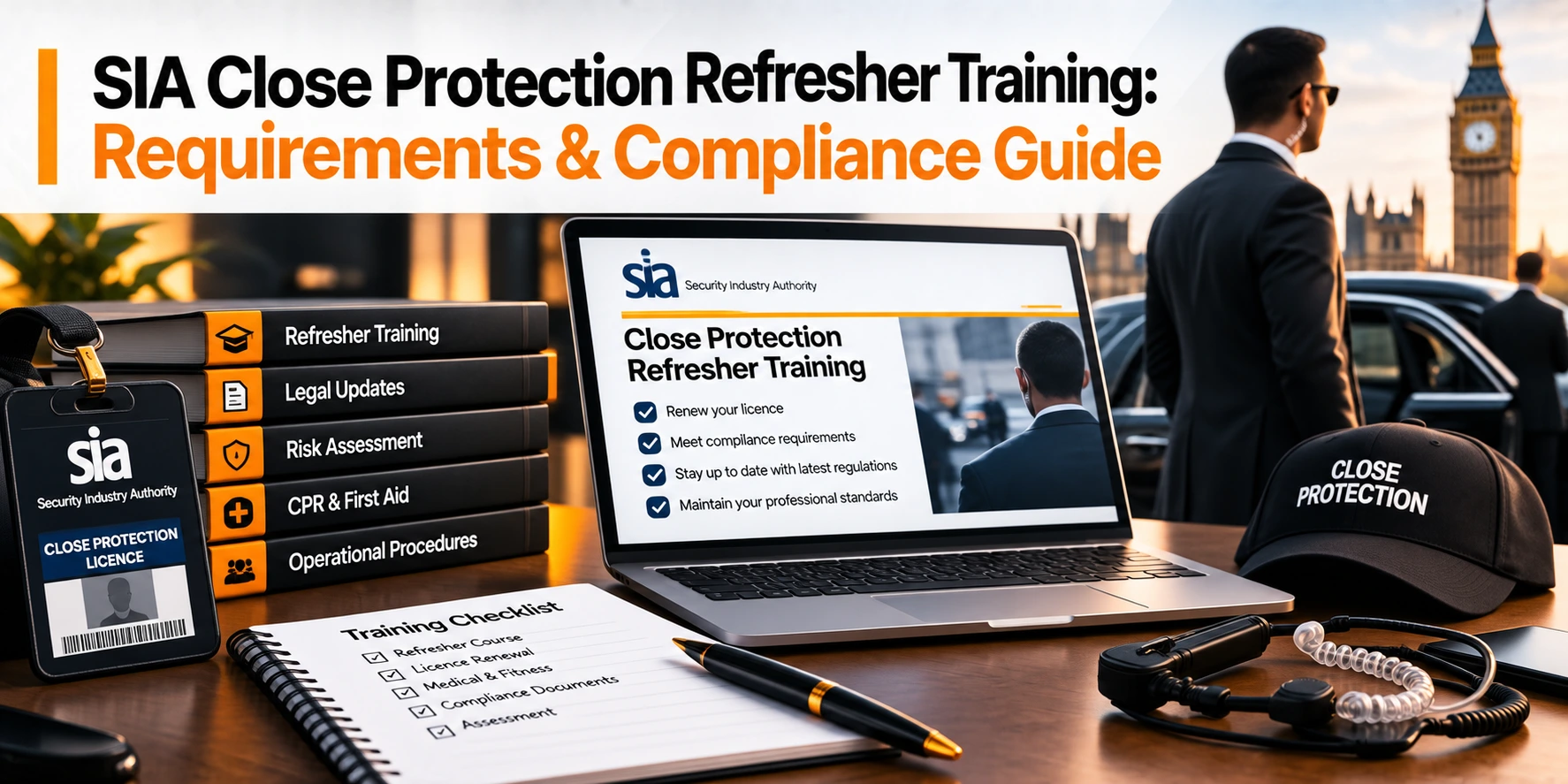
Check three things before you book. Look at your existing qualification, your first aid certificate and your ACT training.
Existing Close Protection Qualification
You need the SIA close protection qualification you originally trained for. The refresher builds on it. It isn’t a starting point for beginners.
First Aid Qualification
Close Protection asks for more first aid than some other licence types. Training providers say you need a Level 3 first aid qualification. That means First Aid at Work (FAW) or an accepted equivalent, such as FREC 3. The Level 2 Emergency First Aid at Work certificate isn’t enough for this role.
Check the expiry date now. Some providers want a certain amount of validity left when the course starts. Rules vary, so ask before you pay.
ACT Awareness and ACT Security
ACT stands for Action Counters Terrorism. It’s counter-terrorism awareness training. Check yours is still valid before your renewal window opens. Requirements can vary by route, so confirm with your provider or the SIA.
What Does the Close Protection Refresher Course Cover?
It targets the areas where skills slip most. It doesn’t repeat the whole original course.
- Terror threat awareness: spotting and responding to changing threats
- Physical intervention: general principles and the law
- Close protection physical intervention: techniques for protecting a principal
- Searching: searching people and premises
- Vulnerability and safeguarding: spotting and helping vulnerable people
Why Does the Course Include Door Supervisor Content?
Close Protection sits inside a wider set of close protection training standards shared across SIA licences. Some skills overlap. De-escalation, safe physical control and spotting vulnerability matter in every security role. They’re part of close protection operative duties, not just door work.
Following them also keeps your close protection operatives compliance record clean.
How Long Does Close Protection Refresher Training Take?
It depends on the provider. SIA refresher training duration also changes with how much you study beforehand.
How Many Days Does the Course Take?
Providers arrange classroom and self-study time differently. Read the course outline, not just the headline number on a landing page.
What Is Self-Study?
Self-study is learning you do before the course, usually theory. It can shorten the classroom part. It doesn’t cut the content.
Which Parts Must Be Completed in Person?
Physical intervention, searching and other hands-on tasks need face-to-face attendance. An assessor has to watch you do them.
Can You Complete Close Protection Refresher Training Online?
Only in part. No genuine provider can run the full course online, because the practical work needs a real room and a real assessor.
What Can Be Completed Through Distance Learning?
Theory and knowledge modules can often be done remotely. Look for SIA training close protection distance learning or blended options. They handle theory at home and practice in person.
What Must Be Completed Face-to-Face?
Physical intervention and searching. These are safety-critical skills. A screen can’t test them.
What Should You Check Before Booking an Online Course?
Be wary of “fully online” claims. Ask which parts happen online and which need attendance. Get the answer in writing.
What Assessments Are Involved?
Expect a knowledge test and a practical test. Formats vary by awarding organisation.
Knowledge Assessment
This covers the theory: threats, the law and safeguarding.
Practical Assessment
Close protection training assessment includes physical intervention and searching. A qualified assessor watches you perform them.
What Happens If You Do Not Pass?
Resit rules vary by provider and awarding organisation. Ask about them before you book, not after.
How Much Does Close Protection Refresher Training Cost?
Prices vary widely, so there’s no fair single figure to quote. Your total may include:
- the course fee
- first aid renewal
- ACT training
- resits
- travel and accommodation
Training fees and your SIA licence renewal fee are separate. Passing the refresher doesn’t cover the SIA’s application fee. You pay that to the regulator. That fee changed on 1 April 2026, so check the current amount on GOV.UK.
Many operatives are self-employed. If you work for yourself, our guide to Class 4 National Insurance explains another cost to consider when planning your annual budget. Training, travel and kit may count as business expenses, For wider tax updates, explore our HMRC news and guides. For help with wider budgeting, see our finance section.
How Do You Choose an SIA Close Protection Refresher Provider?
Check the Awarding Organisation
The awarding organisation issues the qualification. The training provider teaches it. Know which body sits behind your certificate.
Check the Training Provider
The SIA doesn’t personally vet every course. Approval runs through recognised awarding organisations. So an SIA accredited training provider should be linked to one. A good SIA close protection training provider will name its awarding body without fuss.
Check What the Course Includes
Make sure first aid, ACT and the refresher are itemised. Vague bundles hide costs.
Check the Practical Training Arrangements
Ask where the practical part happens. Ask if it’s in the price.
Check the Total Price
Add everything up. A cheap course fee can hide dear extras. Judge professional close protection training on total cost and quality, not the headline.
How to Renew Your SIA Close Protection Licence?
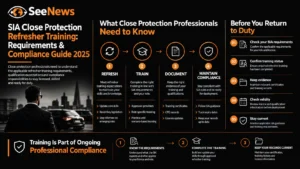
Follow these steps in order.
- Check your existing qualifications. Confirm you hold the Close Protection qualification.
- Check your first aid certificate. Make sure your Level 3 is still valid.
- Check your ACT requirements. Confirm your ACT Awareness and ACT Security training is current.
- Complete the refresher training. Book a close protection licence renewal training course in good time.
- Receive your qualification. Keep the certificate safe.
- Submit your SIA licence renewal. You can usually apply up to four months before expiry.
- Complete any required checks. Answer SIA requests quickly.
- Monitor your renewal. Keep evidence of everything you sent.
Treat this as a close protection operative licence refresh you start months ahead, not weeks.
A Worked Example: Planning a Renewal
Take a hypothetical operative whose licence expires on 31 March 2027. This is an illustration, not official guidance.
- Six months before (end of September): Check the first aid certificate and ACT training. Renew either one if it’s close to expiring.
- Five months before (end of October): Compare two or three providers. Ask about the awarding organisation, practical arrangements and total price.
- Four months before (end of November): The renewal window opens. Book the refresher and start any self-study.
- Three months before (end of December): Attend the classroom and practical days. Wait for your certificate.
- After that: Submit the SIA application with time to spare.
The exact dates aren’t the point. The buffer is. If a course is full or a certificate arrives late, you still have room to recover.
What Happens If Your SIA Licence Expires?
Can an Expired Licence Be Renewed?
It depends on how long ago it expired and on current SIA policy. Don’t assume. Ask the SIA.
When Is a New Application Required?
Usually when too much time has passed since expiry. The SIA sets the limit.
Can You Continue Working After Your Licence Expires?
No. Working in a licensable role without a valid licence is a criminal offence. Don’t risk it.
How Can You Avoid a Gap in Your Licence?
Start early. Begin training as soon as the four-month window opens.
Close Protection Refresher vs Door Supervisor Refresher
The two routes serve different licences. Neither is better for everyone.
| Close Protection refresher | Door Supervisor refresher | |
| Mandatory from | 1 April 2026 | April 2025 |
| First aid | Level 3 | Often Level 2 |
| Focus | Threat awareness, protecting a principal | General door work |
When Is the Close Protection Refresher Relevant?
When you hold, or want to keep, a front-line Close Protection licence.
When Could the Door Supervisor Route Be Relevant?
When you hold, or want, a separate Door Supervisor licence.
Can a Close Protection Operative Switch Licence Categories?
Generally yes. GOV.UK says a close protection licence holder can take the door supervisor refresher and switch to a door supervisor licence. But each category has its own training rules. Switching isn’t a shortcut.
Common Mistakes to Avoid
- Confusing top-up training with refresher training. They’re separate requirements.
- Using outdated SIA information. Rules changed through 2025 and 2026. Old blog posts may be wrong.
- Ignoring first aid validity. An expired certificate can stop your booking.
- Forgetting ACT requirements. Don’t assume old training still counts.
- Assuming everything can be completed online. Practical parts need attendance.
- Assuming every training provider is SIA-approved. Approval runs through awarding organisations.
- Waiting until the licence has expired. This risks a gap in work.
- Assuming the refresher replaces the original qualification. It sits alongside it.
Your Refresher Checklist
Before booking:
- Licence expiry date confirmed
- Existing qualification verified
- First aid validity checked
- ACT Awareness and ACT Security confirmed
- Training provider and awarding organisation checked
- Course format and practical arrangements clear
- Total cost worked out
After completing training:
- Qualification received
- Certificates kept safe
- Renewal application submitted
- Any required checks completed
- Renewal status monitored
Conclusion
Refresher training has been mandatory for Close Protection renewals since 1 April 2026. Check your qualification, first aid and ACT training first. Choose a provider linked to a recognised awarding organisation. Confirm what the price includes. Then send your renewal in good time. Leaving it late is the biggest risk. For more plain-English updates on rule changes like this, Seenews explains what they mean in practice.