Emma and her partner both work full-time. Their nursery bill runs to £900 a month. Neither of them knew the government would cover a fifth of that cost.
A colleague mentioned it in passing. That’s when Emma found out. Roughly £2,000 a year had been sitting unclaimed. Nobody had told them how the scheme worked.
Tax free childcare helps working families cover this kind of cost. The government tops up whatever you pay in. Many parents miss out entirely. Others end up on the wrong scheme. Usually, it’s because the rules aren’t explained clearly.
This guide covers eligibility. It covers how much you can get. It walks through how to apply, how to keep your account active, and how the scheme compares to other childcare support.
What Is the Tax Free Childcare Scheme?
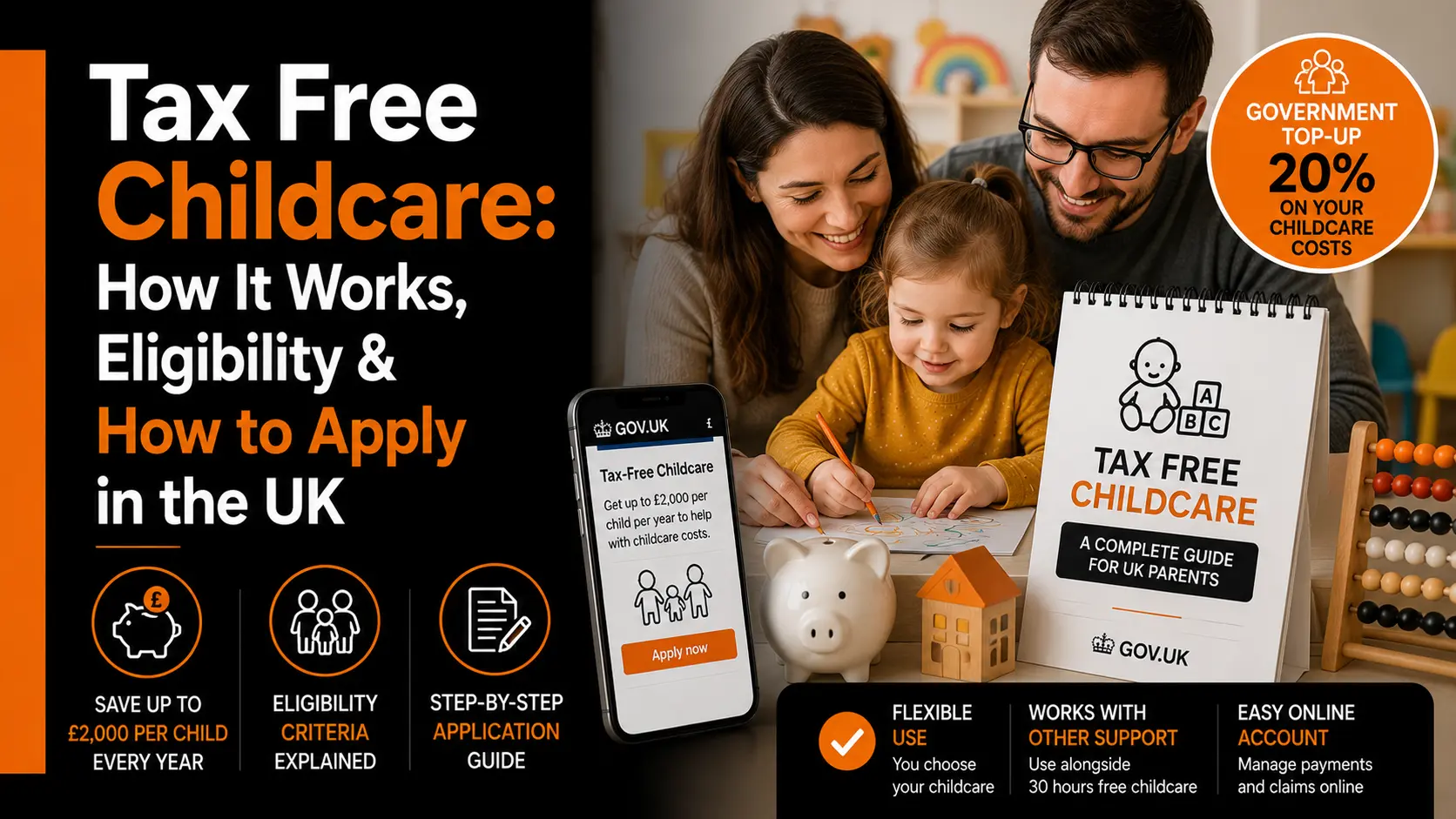
For every £8 you pay in, the government adds £2. That’s a 20% top-up on approved childcare costs. HMRC runs the scheme through a dedicated online account. This account sits apart from your regular bank account. You pay your childcare provider directly from it.
How Does Tax Free Childcare Work?
You open an account. You deposit money. The top-up appears almost right away. Pay £800 towards a £1,000 nursery bill, and the government adds the remaining £200.
How Much Can You Receive?
Support runs every three months. You can get up to £500 each quarter per child. That’s £2,000 a year. Once you hit that cap, deposits stop attracting a top-up. The cap resets at the start of the next quarter.
Who Runs the Scheme?
HMRC runs hmrc tax-free childcare accounts directly. A separate service called Childcare Choices helps families work out which support fits them best.
Who Is Eligible for Tax Free Childcare?
Basic Eligibility Requirements
Your child must be under 11. The age limit rises to 17 if they’re disabled. You’ll need to be working. Your earnings must sit above a minimum level and below an upper cap.
Income Rules Explained
Each parent must earn roughly 16 hours a week at the National Living Wage. For 2026/27, that’s about £2,643 every three months.both parents in a couple must work on an employed or self-employed basis and have an income of at least £2,643 (2026/27) each every three months.
There’s an upper limit too. Neither parent can earn more than £100,000 a year.your ‘adjusted net income’ must not be over £100,000 in the current tax year. This is a strict cap and applies to each parent individually. HMRC checks this per parent, not as a joint household figure.
One detail catches people out. This £100,000 figure includes salary, bonuses, and dividends. It’s not just your base pay. Many higher earners assume only salary counts. That assumption can cost them.
Employment Requirements
Both parents generally need to be working. This applies whether you’re employed or self-employed. Each parent must clear the minimum earnings threshold on their own.
Self-Employed Parents
Self-employed parents can apply. New businesses get a grace period too. During this time, the minimum income rule doesn’t strictly apply. HMRC recognises that a new business takes time to find its feet.
Parents on Maternity, Paternity or Adoption Leave
Leave still generally counts as being in work. This applies to children already enrolled in the scheme. There’s one catch for a brand-new child: eligibility only covers the first 31 days of leave.
Children With Disabilities
Disabled children qualify up to age 17. The standard cutoff for other children is 11. Disabled children also get a higher support cap, since specialist childcare tends to cost more.
Quick eligibility checklist:
- Child is under 11 (or under 17 if disabled)
- Both parents are working and earning above the minimum threshold
- Neither parent earns over £100,000 a year
- Not currently claiming Universal Credit or Childcare Vouchers for the same costs

Who Cannot Claim Tax-Free Childcare?
Parents earning above £100,000 fall outside the scheme entirely. There are no exceptions here.
Families already getting Universal Credit’s childcare element can’t claim both. The same rule applies to anyone still using old Childcare Vouchers.you cannot use Tax-Free Childcare at the same time as Childcare Vouchers, Universal Credit childcare element, or Tax Credits childcare element.
There’s one more sticking point. Your provider must be registered with the scheme. If they’re not, you can’t pay them through your account. This applies even if you personally meet every other rule.
What Is Tax Free Childcare Allowance and How Much Can You Receive?
Every £8 you deposit brings an automatic £2 from the government. That works out to a 20% discount on childcare.
The standard tax free childcare limit is £500 a quarter. That’s £2,000 a year per child. Disabled children get double that tax free childcare threshold. Their limit is £1,000 a quarter, or £4,000 a year. The amount is increased to £1,000 every three months if your child has a disability, adding up to £4,000 a year.
Here’s a real example. Sarah pays £1,000 a month for nursery. She deposits £800 herself. HMRC adds £200 automatically. Over a full year, that’s £2,000 in top-ups. This lands her right at the annual cap.
What Childcare Can You Pay For?
Nurseries, childminders, and school clubs usually qualify. So do holiday clubs. The provider just needs to be registered with the right body. In England, that’s Ofsted. Other UK nations use their own equivalent.
Tax free childcare Scotland, tax free childcare Wales, and tax free childcare Northern Ireland all follow the same UK-wide scheme. The registration bodies differ slightly by nation. The core rules stay the same everywhere.
What’s excluded matters just as much. Unregistered childminders don’t qualify. Neither do informal arrangements with friends or family. General babysitting doesn’t count either, even if it happens regularly.
| Childcare Type | Eligible? | Notes |
| Registered nursery | Yes | Must be Ofsted-registered or equivalent |
| Registered childminder | Yes | Registration checked automatically on sign-up |
| School holiday clubs | Yes | Must be an approved provider |
| Before/after-school clubs | Yes | Includes clubs run through the school itself |
| Nanny (registered) | Yes | Must be on an approved childcare register |
| Friend or family babysitting | No | Not a registered provider |
| Unregistered childminder | No | Registration status can be checked online |
| General babysitting services | No | Doesn’t meet the scheme’s provider requirements |
Approved Childcare Providers
Providers must register with the scheme themselves. Being Ofsted-registered isn’t the same thing. A nursery could be Ofsted-approved but still not signed up to take Tax-Free Childcare payments.
What Is Not Covered?
The scheme doesn’t cover school fees for compulsory education. It also skips activities that aren’t genuine childcare, like private tutoring that has nothing to do with supervision.
How to Apply for Tax-Free Childcare?
Information You’ll Need
Gather these before starting:
- National Insurance number
- Personal details for you and your partner
- Employment information
- Your child’s details
Step-by-Step Application Process
- Visit GOV.UK and search “apply for tax-free childcare”
- Answer questions about your income and employment
- Confirm your child’s eligibility
- Open your childcare account
- Deposit funds and pay your provider directly
How to Open Your Childcare Account?
Your account opens automatically once HMRC approves your application. It’s ready for deposits straight away. There’s no separate sign-up step.
Paying Into Your Account
Deposits can come from anyone. That includes you, your partner, or even grandparents. The government top-up applies no matter who pays in.
How Your Childcare Provider Gets Paid?
You pay your provider directly from the account. The government top-up is already built into the balance. Your provider simply receives one combined payment.
What Happens After You Apply?
HMRC usually confirms eligibility within a few weeks. Once approved, top-ups get added automatically every time you deposit money. You can start paying your provider right away.

Keeping Your Eligibility
Reconfirming Every Three Months
You must reconfirm your eligibility every three months. Skip this, and your account goes inactive.you must reconfirm eligibility every 3 months through your online account, or the account becomes inactive. HMRC sends a reminder beforehand. Still, it’s worth setting your own calendar note. A lapsed account can mean losing top-ups mid-quarter.
What Happens If Your Income Changes?
A pay rise above £100,000 needs reporting. So does a drop below the minimum threshold. Your eligibility can shift either way. HMRC expects you to update your details promptly, not wait for the next reconfirmation.
Changing Jobs
A new job doesn’t automatically end your eligibility. You just need to still meet the income rules. Update your employer details at your next reconfirmation.
Returning to Work
Returning after leave usually keeps your account active. No fresh application is needed. Your income just needs to meet the threshold once you’re back.
What If One Parent Stops Working?
If one parent stops working entirely, the household usually loses eligibility. There’s an exception for things like disability benefits. Otherwise, both parents need to meet the working requirement again.
Tax-Free Childcare vs Other Childcare Support
| Scheme | Best For | Can It Be Used Together? | Main Limitation |
| Tax-Free Childcare | Working families above Universal Credit thresholds | No, not with UC or Vouchers | £100,000 income cap |
| Universal Credit childcare | Lower-income working families | No, not with TFC | Often pays more for low earners |
| Childcare Vouchers | Employees still enrolled pre-2018 | No, not with TFC | Closed to new applicants |
| 15/30 Free Hours | All eligible families with 3-4 year olds | Yes, alongside TFC | Doesn’t cover extra hours |
For most working families above Universal Credit levels, Tax-Free Childcare tends to work out better. Lower-income households should check Universal Credit’s childcare element first. It often pays a higher share of costs.
Common Problems and How to Solve Them?
A rejected application usually means one thing. Your income details didn’t match HMRC’s records, or your child’s age fell outside the limits. If a top-up isn’t showing after a deposit, check your provider is properly registered first. That’s the most common cause.
Ask an unregistered provider to sign up directly. You can’t pay them through the account otherwise. Wrong income details get fixed during reconfirmation. And if your eligibility gets removed out of nowhere, it usually traces back to a reported change in income or employment.
Common Misconceptions About Tax-Free Childcare
Not everyone with children qualifies. Income and job rules genuinely exclude plenty of families. The government doesn’t cover all childcare costs either. It only covers 20%, up to the cap.
You can’t stack every scheme together. Tax-Free Childcare specifically excludes Universal Credit and Vouchers. Reconfirmation happens every three months, not just once at signup. Only registered providers accept payments. And self-employed parents can absolutely apply, despite a fairly common myth to the contrary.
Common Mistakes to Avoid
- Missing the three-month reconfirmation deadline
- Choosing the wrong childcare support scheme for your income level
- Assuming every provider is automatically registered
- Forgetting to report income changes promptly
- Waiting until childcare starts before applying
- Confusing Tax-Free Childcare with old Childcare Voucher schemes
Final Thoughts
Check your eligibility for the tax free childcare scheme properly. Don’t assume you don’t qualify. Don’t default to the wrong option either. Getting this right can save a working family thousands of pounds a year.
Reconfirm on time. Report income changes promptly. Choose the childcare support that fits your circumstances, not just the first one you hear about.
Seenews keeps you updated as UK childcare and family support rules shift. That way, you’re never the parent who finds out about £2,000 in missed support a year too late.