Introduction
You’ve just moved house. Boxes everywhere, new keys in your pocket, a hundred things to sort out. Somewhere on that list, easy to forget, sits your voter registration.
The process for how to change address on electoral roll UK residents follow is genuinely quick, about five minutes online yet plenty of people skip it entirely. That’s a mistake. Your electoral registration doesn’t just decide whether you can vote, lenders check it too, and so do identity verification services when you open a bank account or take out a loan.
This guide walks through exactly what the electoral roll is, why moving means you need to register again, and how to get it sorted properly the first time.
What Is the Electoral Roll?
What Is the Electoral Register?
The electoral register is the official list of everyone eligible to vote at a specific address. Councils use it to run elections; other organisations use it to confirm who lives where.
Electoral Roll vs Open Register
Here’s where people get confused. The full electoral register stays private, used only for elections and specific legal purposes. The open register is a separate, optional version and if you don’t actively opt out, your details can be sold to marketing companies and other third parties.
Who Maintains the Electoral Register?
Your local council’s Electoral Registration Officer manages the register for your area. Each council runs its own patch, which matters if you’re moving between different local authorities.
Why Keeping Your Address Updated Matters?
Beyond voting, an accurate registration strengthens your credit file. Lenders and credit reference agencies use it to confirm your identity and address history, so an outdated entry can genuinely slow down a mortgage or loan application.
Do You Need to Change Your Electoral Roll Address After Moving?
Yes, and this catches a lot of people off guard. Moving house doesn’t automatically update anything you have to actively register again at your new address.
Why Must You Update Your Registration?
The system has no way of knowing you’ve moved unless you tell it directly. Council tax records don’t feed into it, and neither does your bank or GP.
Do You Need to Register Again?
Every single time you move, yes. Update electoral register address details cover name changes, address changes, and nationality changes alike change your name, your address, or your nationality, and a fresh registration is required. You’ll need to register again if you’ve changed your name, address or nationality.
What Happens to Your Old Address?
Providing your previous address when you register helps the council remove old electoral address entries cleanly.if you provide your last address, we will be able to remove your electoral registration at your last address. If you do not provide your previous address, your entry on the electoral register will be removed by a different process. Skip that detail, and removal takes longer.
Moving Within the Same Council vs Moving to a Different Council Area
Moving within your existing council area is usually the smoother process, since your local Electoral Registration Officer already holds some of your information. Cross into a different council’s territory, and you’re essentially starting fresh with a new authority altogether.
Who Needs to Update Their Electoral Roll Address?
Nearly everyone who’s relocated needs to act, but the details shift slightly by situation:
- Homeowners register as soon as you’ve settled at the new property
- Tenants the same rule applies, regardless of rental length
- Students often eligible to register at both term-time and home addresses
- People with two homes can sometimes register at both, depending on circumstances
- Overseas voters a separate registration route exists for UK citizens living abroad
- People without a fixed address a declaration of local connection can still get you registered
How to Change Your Address on the Electoral Roll in the UK?
Information You’ll Need
The documents for address change are minimal, and the same electoral roll address requirements apply whether you’re a homeowner or a tenant before you start, gather these:
- National Insurance number
- Previous address
- New address
- Date of birth
Step-by-Step Registration Process
Here’s exactly how to register new address to vote in a few short steps:
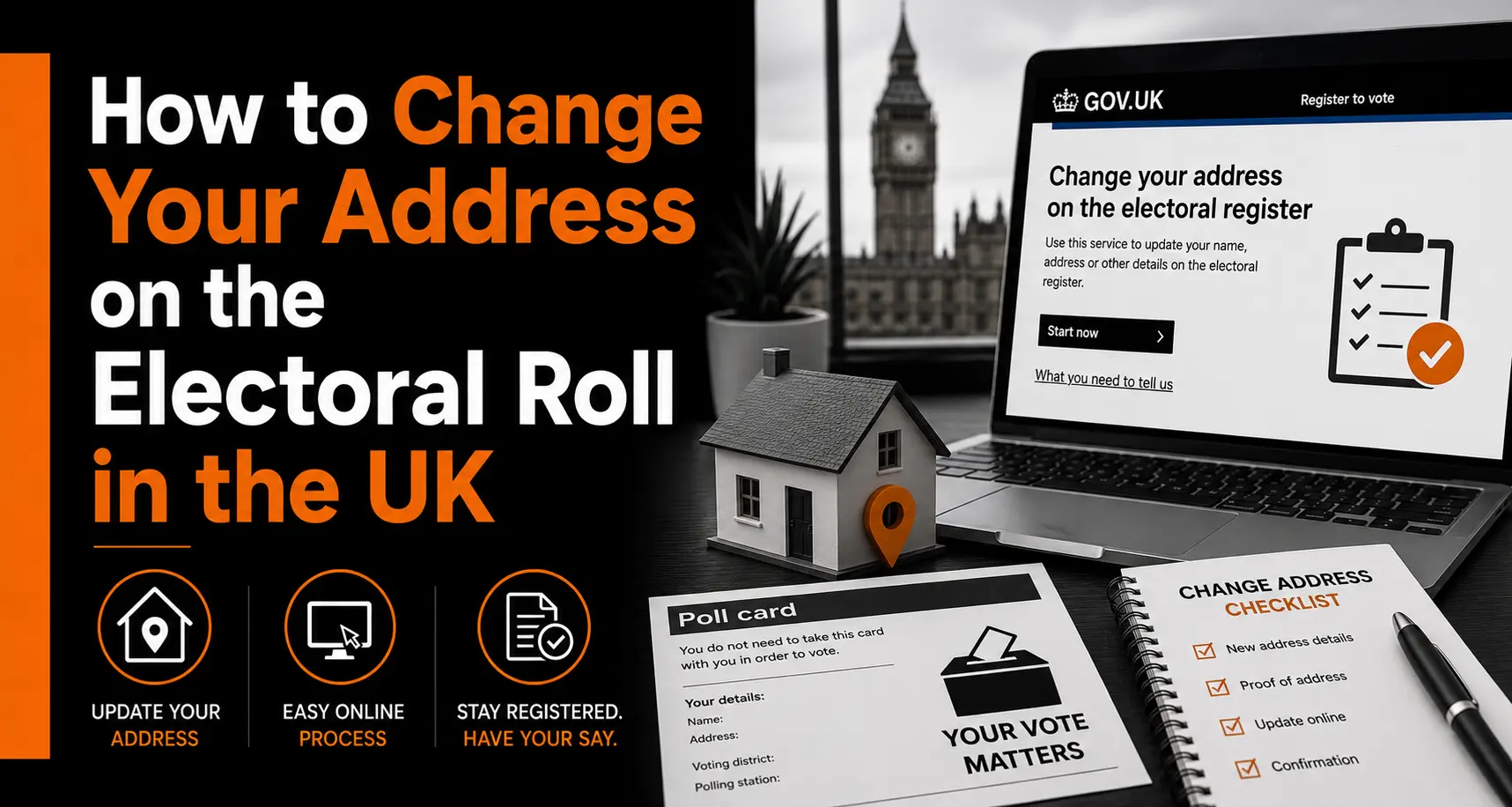
- Go to gov.uk/register-to-vote
- Enter your name, date of birth, and nationality
- Provide your new address and your previous one
- Enter your National Insurance number
- Submit you’ll typically hear back within a couple of weeks
Can You Update Your Address Online?
Yes, and this is by far the fastest route for an electoral roll address change online, taking roughly five minutes for most people to register to vote online, you need just five minutes and your National Insurance number. Paper forms exist too, useful if you don’t have internet access or prefer posting a physical application.
What If You Don’t Have Your National Insurance Number?
You can still register without it. The form will simply ask you to explain why it’s missing, and the council will verify your identity through other means instead you can still register if you do not have a National Insurance number and the form will ask you to explain why you cannot provide one; we’ll then contact you to verify your identity.

What Happens After You Submit Your Application?
How Your Application Is Processed
Your details get checked against government records to confirm your identity. If everything matches cleanly, you’re added to the register without further contact.
How Long Does It Take?
The typical answer is around two weeks, though this can stretch longer during busy periods, particularly ahead of a scheduled election.
When Will Your Old Address Be Removed?
This happens automatically once your previous address is confirmed and your new registration is approved, assuming you provided that old address during registration.
How to Check Your Registration Status?
Contact your local council’s electoral services team directly if you want confirmation. Most councils respond within a few working days.

Special Situations You Should Know About
A handful of scenarios need slightly different handling:
- Moving before an election if you need to change address before election deadlines, register as early as possible to guarantee you’re on the roll in time
- Registering before you move you generally need to be resident at an address before registering there
- Changing both your name and address both changes can be submitted together in most cases
- New-build properties not showing online contact your council directly if your postcode isn’t recognised yet
- Temporary accommodation a declaration of local connection can still get you registered
Does Changing Your Address Affect Your Credit Score?
Electoral Roll and Credit Reference Agencies
Being on the electoral register at your current address genuinely helps your credit file. Agencies use it as one of the strongest signals confirming you live where you say you do.
How Long Before Credit Files Update?
Typically within a month or so of your registration being confirmed, though this varies slightly between different credit reference agencies.
Why Lenders Check Electoral Registration?
An address that matches your electoral registration reduces fraud risk from a lender’s perspective. There’s genuinely no electoral roll address change cost involved, and while there’s no direct fine, missing from the roll entirely can slow down mortgage and credit applications, even with a strong financial history otherwise.
Common Misconceptions About Updating Your Electoral Roll
- Updating council tax does not update your electoral registration
- Changing your driving licence address doesn’t touch the electoral roll either
- Banks never update your registration on your behalf
- Renting doesn’t stop you from registering at your rental address
- Students may genuinely register at two addresses simultaneously
- The electoral roll and the open register are two entirely separate things
Common Problems and How to Solve Them
My old address still appears to contact your previous council directly to confirm removal, especially if you didn’t provide that address when registering.
My new address isn’t listed, check processing has actually completed; it can take up to two weeks.
I entered the wrong address and contacted your council’s electoral services team to correct it manually.
I lost my National Insurance number. You can still register; explain this on the form and verify your identity another way.
I haven’t received confirmation to reach out to your local council directly rather than assuming something’s gone wrong.
Electoral Roll vs Other Address Updates
| Address Update | Automatically Updates Electoral Roll? |
| Council Tax | No |
| Driving Licence | No |
| Bank Address | No |
| GP Registration | No |
| Electoral Registration Application | Yes |
Only a fresh electoral registration application actually updates your entry. Every other address change you make sits in a completely separate system.
Common Mistakes to Avoid
There’s no direct penalty for not updating electoral roll entries, but the practical consequences add up fast. Use this electoral roll address checklist to avoid the most common slip-ups:
- Assuming council tax updates your electoral registration automatically
- Forgetting to register again after moving house
- Waiting until election season to sort it out
- Entering the wrong postcode or address detail
- Registering with the wrong local authority
- Ignoring confirmation letters or emails from your council
- Assuming someone else, like a landlord or letting agent, will register you
Frequently Asked Questions
How do I change my address on the electoral roll in the UK?
Visit gov.uk/register-to-vote and complete the online form with your new address, previous address, date of birth, and National Insurance number this doubles as your electoral register proof of address once confirmed. The whole process takes about five minutes and confirmation typically follows within two weeks.
What’s the difference between the electoral roll and the open register?
The full electoral register stays private and gets used only for elections and specific legal checks, like credit reference verification. The open register, by contrast, is an optional extra version of your details that can be sold to marketing companies unless you actively opt out worth checking your preference when you register.
Can I be registered at two different addresses at once?
Students juggling term-time and home addresses, along with people who genuinely split their time between two properties, often qualify to register at both locations simultaneously. Each situation gets assessed individually by the relevant Electoral Registration Officers, so it’s worth registering at both and letting the councils confirm eligibility.
Does updating council tax update my electoral registration?
Council tax and the electoral register run through entirely separate systems, managed by different departments within your council. Sorting your council tax address, your bank details, or even your driving licence does nothing for your voter registration; each one needs updating independently through its own process.
Will updating my electoral registration affect my credit score?
Being correctly registered strengthens identity verification for lenders, since it confirms you genuinely live where you claim to. Missing from the register can work against you during credit checks, sometimes slowing down mortgage or loan applications even when your finances are otherwise solid.
Final Thoughts
Updating your electoral roll address takes only a few minutes, but it has a much bigger impact than most people realise. Knowing how to change address on electoral roll in the UK helps ensure you can vote without issues while also supporting smoother credit checks and identity verification in the future. Moving home does not automatically update your electoral registration, so you need to complete the process yourself through GOV.UK.
At Seenews, we simplify UK registration rules, moving guidance, and public service updates into clear, practical advice you can use. Follow this guide on how to change address on electoral roll UK, complete your registration correctly the first time, and avoid the stress of discovering you’re not registered just before an election.