Introduction
When the Regulator of Social Housing published its judgement on London & Quadrant Housing Trust in August 2025, the sector paid close attention. L&Q is not a peripheral player. It owns or manages over 110,000 homes, making it one of the largest housing associations in the UK. What happens at that scale sends signals across the entire sector and this judgement sends several that landlords, auditors, and compliance teams cannot afford to ignore.
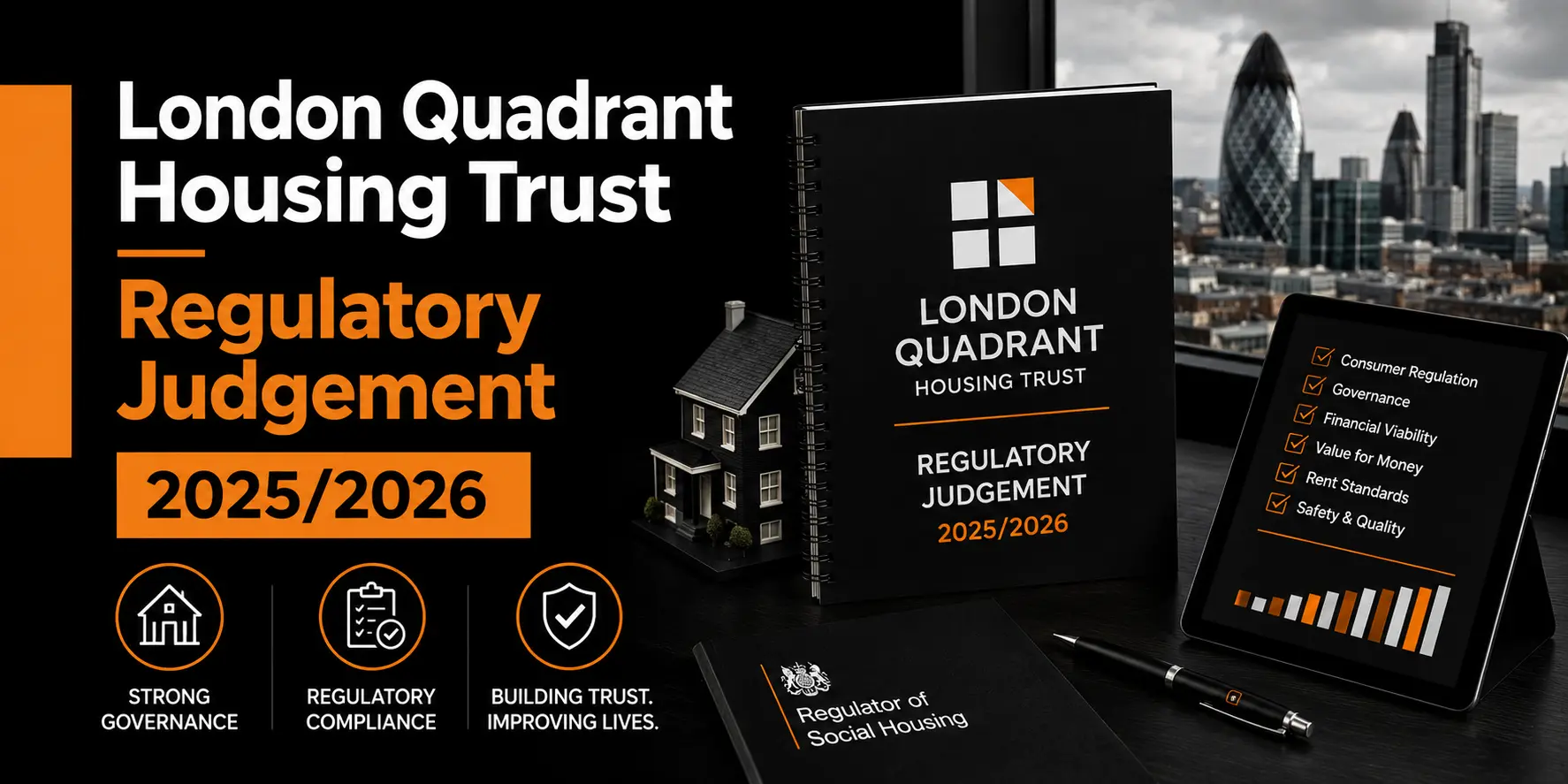
The judgement confirmed a consumer grading of C2, a governance downgrade to G2, and a financial viability grading of V2. None of those ratings represent a crisis on their own. But taken together, and in the context of a regulatory environment that is becoming significantly more demanding, they carry real implications for L&Q itself, and for every housing association and landlord operating in England.
This article breaks down what the judgement means, what compliance and accounting issues it surfaces, and what practical steps landlords should take in response.
What Is the London Quadrant Housing Trust Regulatory Judgement?
The Role of the Regulator of Social Housing
The Regulator of Social Housing is the independent body responsible for ensuring that registered housing providers in England meet defined standards of governance, financial viability, and consumer service delivery. The Social Housing (Regulation) Act 2023 changed UK housing regulation significantly; the RSH used to react to problems, but now it checks landlords on a set schedule. That shift from reactive to proactive regulation is important. It means every large housing association should now expect a scheduled inspection, not just a review triggered by a complaint or failure.
Why L&Q Was Reviewed?
Prior to this regulatory judgement, the governance and financial viability grades for L&Q were last updated in December 2023, following a stability check that confirmed a G1 grade for governance and a V2 grade for financial viability. This was also the first time the RSH issued a consumer grade in relation to this landlord. The August 2025 judgement therefore represented a significant step: a full inspection under the new consumer standards framework, producing grades across all three regulatory dimensions simultaneously.
What the Grades Actually Mean?
Understanding the grading system matters before drawing conclusions about severity.
| Grade | Area | Meaning |
| G2 | Governance | Meets requirements but needs to improve some governance arrangements |
| V2 | Financial Viability | Meets viability requirements but must manage material risks |
| C2 | Consumer Standards | Some weaknesses in delivering consumer outcomes improvement needed |
A G2 or V2 grade is not a crisis. It means improvements are needed. The distinction matters because the temptation is to read a downgrade as a warning of imminent financial trouble. That is not what this judgement says. What it does say is that L&Q and by extension, organisations of similar scale and complexity need to sharpen its governance reporting, manage material financial risks more rigorously, and address specific gaps in consumer standard delivery.
Key Findings from the Judgement
Governance: Board Reporting Needs Strengthening
The Regulator agreed that the Group Board is appropriately skilled and experienced, and that governance arrangements are effective in delivering strategic objectives and social purpose. The problem was not the board’s composition.it was what the board was receiving.
While financial reporting was judged effective, improvements are needed in board reporting on service performance. That is a specific and important finding. A board can only govern what it can see. When service performance data does not reach board level in a format that connects to risk appetite, strategic oversight weakens and that is precisely what the regulator identified.
Financial Viability: Material Risks Require Active Management
L&Q kept its V2 rating. The regulator noted L&Q has a solid plan and holds around £1 billion in cash. But L&Q must manage two key risks, those being the pressures around development activity, sales performance, and the scale of investment required in existing homes. The V2 rating recognises material risks within the financial plan related to development, sales, and investment in existing homes.
This is a warning about financial headroom rather than solvency. The business plan is funded, but the margin for adverse events is narrower than it used to be.
Consumer Standards: Safety, Quality, and Community Gaps
The judgement found some weaknesses in how L&Q is delivering the outcomes of the consumer standards, specifically in relation to the Safety and Quality Standard and the Neighbourhood and Community Standard.
On the positive side, the regulator acknowledged the effective management of a building safety programme inspecting over 2,000 buildings by April 2026, and the installation of 19,000 humidity sensors to manage damp and mould risks. The challenge areas were non-emergency repair timescales and the handling of anti-social behaviour complaints both of which have direct accounting and operational implications.
Accounting and Financial Reporting Implications
This is where the judgement moves from regulatory commentary into practical territory for finance teams.
Repairs, Maintenance, and Capital vs Revenue Treatment
The distinction between capital improvements and revenue repairs is one of the most consequential accounting judgements a housing association makes. A property group holding 15 units in East London, all leased to L&Q under a long-term corporate lease, faced a potential £45,000 catch-up bill and a tax audit following L&Q’s compliance review. After reconciliation of service charge statements against lease terms, £12,000 of the requested repairs were found to be capital improvements changing the tax treatment and saving the client £3,000 in corporation tax.
That example illustrates a wider point. When a large housing association runs a compliance review of its repair and maintenance obligations, the financial consequences flow downstream to landlords, leaseholders, and joint-venture partners. Getting the accounting treatment right is not just a technical exercise.it has direct tax implications.
FRS 102 and UK GAAP Considerations
Housing associations operating under FRS 102 need to consider how the judgement’s findings interact with their existing accounting policies, particularly around:
| Accounting Area | Relevance to Judgement |
| Repairs and maintenance provisions | Non-emergency repair backlogs may require provision recognition |
| Service charge accounting | Retrospective compliance reviews may trigger restatement considerations |
| Impairment of housing assets | Regulatory pressure on existing stock investment affects asset carrying values |
| Going concern disclosures | V2 rating and material risk factors should be reflected in narrative reporting |
| Grant accounting | Increased investment in existing homes affects component accounting under FRS 102 |
Auditors will be looking at each of these areas more carefully following a judgement of this profile. Finance directors and board treasurers should expect more detailed audit enquiries around provisions, reserves, and going concern narrative.
Budgeting Under Regulatory Pressure
G2/V2/C2 is becoming the new normal for large associations. They are moving money from new builds to fix existing homes. Lenders see housing associations as higher-risk not due to insolvency risk, but because regulation may disrupt planned capital spending.
That shift in lender perception has budget consequences. Housing associations that were planning significant development activity may need to model scenarios in which capital allocations are redirected toward compliance-driven investment in existing stock. The financial planning assumptions that underpinned last year’s budget may need revisiting.
Compliance Impact for UK Landlords
Why Does This Judgement Affect Landlords Beyond L&Q?
Many private landlords and property investors have direct financial relationships with L&Q through long-term corporate leases, joint ventures, or management arrangements. A governance downgrade at L&Q creates ripple effects through those relationships: compliance reviews, revised service charge demands, updated lease interpretations, and in some cases, renegotiated terms.
More broadly, the judgement signals what the Regulator of Social Housing expects from large housing providers operating under its proactive inspection regime. Those expectations will reach every registered provider in time.
Strengthening Governance and Board Reporting
The G2 finding around board reporting has a direct lesson for other organisations. It is not enough for service performance data to exist somewhere in the organisation it needs to reach board level in a format that is meaningful, timely, and connected to the organisation’s stated risk appetite.
| Governance Area | Action Required |
| Board reporting packs | Include service performance KPIs alongside financial data |
| Risk registers | Ensure consumer standard risks are explicitly captured and reviewed |
| Internal audit | Commission specific reviews of complaint handling and repair performance |
| Committee structures | Review whether current committee remit covers consumer standards adequately |
| Board skills audit | Confirm board has sufficient expertise in housing management and consumer regulation |
Repairs Systems and Documentation
The judgement’s findings on non-emergency repair timescales have operational and legal implications. Landlords need documented systems that track repair requests, categorise them correctly, record completion timescales, and escalate failures. Without that documentation trail, neither compliance nor accounting treatment can be defended under scrutiny.
Financial and Operational Risks of Non-Compliance
Impact on Borrowing and Lender Confidence
A governance downgrade can trigger covenant clauses in existing finance arrangements. Lenders who have structured deals around G1-rated counterparties may seek assurances, updated financial information, or in some cases covenant waivers when a downgrade occurs. Finance teams should review existing loan documentation to understand whether the current ratings profile creates any technical covenant considerations.
Reputational and Operational Risk
Beyond the direct financial impact, a public regulatory judgement affects tenant confidence, staff morale, and partner relationships. The reputational dimension is particularly significant for organisations that rely on public sector partnerships or grant funding, where governance ratings can influence eligibility or scoring in procurement processes.
Long-Term Valuation Risk
Businesses preparing for a future sale, merger, or investment round will find that governance and compliance ratings feature prominently in due diligence. A clean regulatory record supports valuation. An unresolved compliance profile introduces risk adjustments that reduce both offer value and the speed of transaction completion.
Immediate Actions for Landlords
Following this judgement, the priority actions for landlords and housing associations fall into three categories:
Governance actions: Review board reporting packs to ensure service performance data is included. Update risk registers to reflect consumer standard obligations. Commission an internal audit of complaint handling processes.
Financial actions: Review repair and maintenance accounting policies under FRS 102. Check whether any retrospective service charge demands require provision recognition. Revisit going concern narrative in light of any material risk exposure. Review loan documentation for covenant implications of any ratings changes.
Operational actions: Audit repair tracking systems to ensure timescales are recorded and reported. Review damp and mould inspection and response protocols. Document complaint handling procedures and ensure escalation routes are clear and functional.
Future Regulatory Trends
The L&Q judgement does not sit in isolation. It reflects a direction of travel that every UK housing association should anticipate. The RSH’s shift to proactive, scheduled inspections means that regulatory scrutiny is no longer something that happens to organisations in crisis.it is a routine feature of the operating environment for every large registered provider.
Consumer standards enforcement will intensify. The C2 grading framework is new, and the regulator is still establishing what good looks like across different types and sizes of providers. Early inspections like the L&Q review are effectively setting the benchmark. Organisations that wait to see what the regulator finds elsewhere before acting are taking a significant risk.
Digital reporting and data transparency requirements are also increasing. The expectation that boards receive timely, accurate, and meaningful performance data is not just a governance preference.it is becoming a regulatory requirement. Investing in the systems and processes that support that kind of reporting is no longer optional at scale.
Frequently Asked Questions
What are the key accounting changes from the 2026 LQHT regulatory judgement?
The judgement does not introduce new accounting standards but flags areas requiring closer attention particularly the classification of repairs versus capital expenditure, service charge accounting, provisions for repair backlogs, and going concern disclosures under FRS 102. Boards are also expected to receive meaningful service performance data alongside financial reporting, not just statutory compliance figures.
Do landlords need to restate previous financial statements due to this judgement?
Not automatically. However, if a compliance review uncovers systematic misclassification of expenditure in prior periods most commonly repairs treated as capital or vice versa restatement may be necessary where amounts are material. Landlords with complex lease arrangements or unresolved service charge disputes carry the highest risk here.
How does the judgement affect rental income recognition and reporting?
It does not directly change how rental income is recognised under FRS 102. The indirect impact comes where compliance reviews trigger retrospective service charge reassessments or revised repair obligations, which can affect the net income position previously reported. Landlords holding properties under long-term corporate leases with L&Q should reconcile those positions carefully.
What records and documentation must landlords maintain for compliance?
Landlords should maintain complete records across five key areas repairs, with full logs of requests, categories, timescales, and completion dates; service charges, with reconciliations against lease terms; damp and mould, with inspection and remediation records; complaints, with response timelines and outcomes; and governance, including board minutes, risk registers, and management accounts.
Does the ruling change how service charges, major works, or reserve funds are treated?
The legal and accounting framework remains unchanged. What changes is the level of scrutiny these areas will receive from auditors, lenders, and the regulator. Poorly reconciled service charge accounts, undocumented reserve fund policies, and informally applied capital versus revenue distinctions are now higher-risk than they were before this judgement.
What immediate compliance actions should landlords take after the judgement?
Three priorities stand out. First, review board reporting to ensure service performance data sits alongside financial figures. Second, check repair and maintenance accounting policies under FRS 102 and confirm the capital versus revenue boundary is applied consistently. Third, commission a compliance gap analysis covering complaints, repairs, damp and mould records, and service charge reconciliations.
How does the judgement impact governance and internal control requirements?
The G2 finding makes clear that effective governance is not just about having a skilled board.it is about what that board receives. Internal controls must generate timely, meaningful performance data that reaches board level. Risk registers should explicitly cover consumer standard obligations, and internal audit programmes should extend beyond financial controls to include complaint handling and repair performance.
Will lenders or funders require updated accounts following the judgement?
It depends on existing loan documentation. Some finance arrangements include covenants tied to governance ratings, and a downgrade from G1 to G2 may trigger notification obligations or requests for updated accounts. Even where no formal covenant applies, lenders are paying closer attention to regulatory positions across the sector and may seek informal comfort. Reviewing loan documentation proactively is the sensible first step.
Does the judgement alter the application of UK GAAP or FRS 102 for housing providers?
No. FRS 102 continues to apply as before. The judgement does, however, highlight the areas within FRS 102 where accounting judgement risk is highest component accounting, repair and maintenance treatment, service charge accounting, provisions, and going concern disclosures. These are the areas auditors and regulators will focus on most closely in the period ahead.
What penalties or regulatory risks do landlords face for non-compliance?
The Regulator of Social Housing holds significant enforcement powers under the Social Housing (Regulation) Act 2023 ranging from regulatory notices and independent review requirements through to board member appointments and asset transfers in serious cases. Financial penalties for consumer standard failures are also available. Beyond formal enforcement, the reputational consequences affect lender confidence, grant eligibility, procurement scoring, and the ability to attract experienced board members making the true cost of non-compliance considerably broader than any direct penalty.
Conclusion
The London Quadrant Housing Trust regulatory judgement is not a story about a failing organisation. It is a clear signal about where the regulatory bar now sits for every housing provider operating under the RSH’s proactive inspection regime.
The G2 governance downgrade, maintained V2 viability rating, and first-ever C2 consumer grade tell a consistent story: compliance now requires the right information reaching the right people at the right time, consumer standards delivered and documented thoroughly, and financial controls strong enough to withstand detailed scrutiny.
For UK landlords and housing associations, the message is simple. Proactive compliance, rigorous financial reporting, and strong governance are no longer aspirational; they are the baseline the regulator expects, and the baseline against which every organisation will eventually be measured.