Introduction
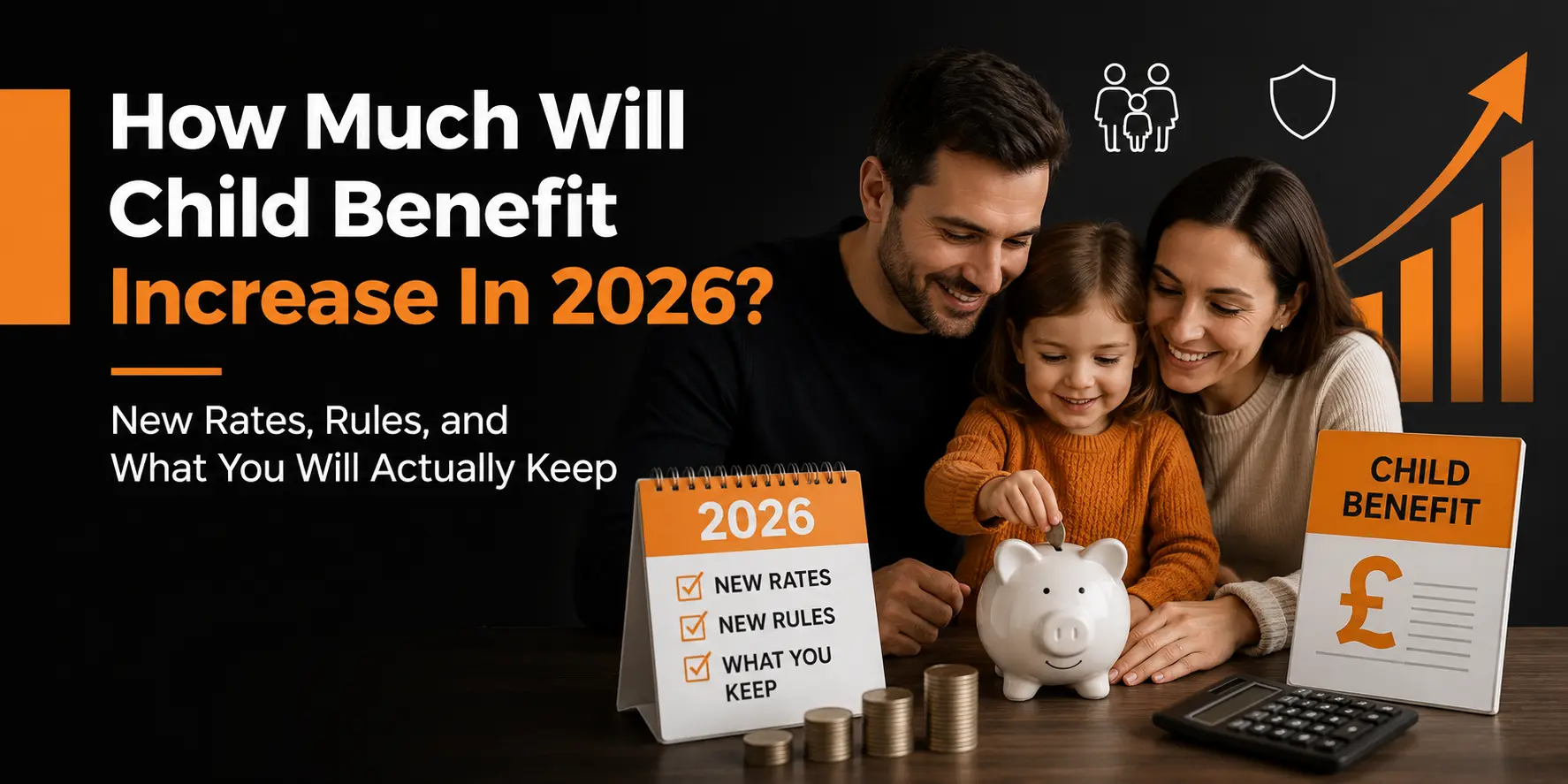
Every single pound matter when you are balancing a family budget. Child Benefit remains that dependable payment which quietly covers the weekly shop, new school shoes, or local gymnastics club fees for millions of parents across the UK.
The great news is that rates are going up in April 2026. Below are the fresh weekly amounts, plus this post shows you what different households will actually receive, and explains how the High-Income Child Benefit Charge could affect what lands in your bank account.
Quick Answer: How Much Will Child Benefit Go Up In 2026?
Starting 6 April 2026, Child Benefit payments are getting a modest boost of 3.8% to help keep up with the rising cost of living. For your eldest or only child, the weekly rate moves up to £27.05, while each additional child will now bring in £17.90.
If you’re raising two children, that adds up to £2,337.40 over the year, putting an extra £88.40 back into your family budget compared to last year.
What Is Changing In April 2026?
Every April, the government runs what is termed an “uprating” cycle. By law, multiple benefits must be reviewed each year to make sure they have not lost too much value against rising prices.
The 3.8% bump reflects inflation cooling slightly from recent peaks. For most parents already claiming, nothing needs to be done. The higher rate kicks in automatically. You will not need to fill out any new forms.
April 2026 is also huge for bigger households because the removal of the two-child limit on Universal Credit is rolling out in many regions. Child Benefit itself has never had a two-child limit. You can claim it for every child you are responsible for. But the alignment of these two policies in 2026 makes this a massive year for UK family finances.
The Full 2026/27 Rate Breakdown
Child Benefit is split into two tiers. The first covers your oldest or only child. The second, the “additional” tier, applies to every other child in your household.
Weekly Rates From 6 April 2026
| Child | New Rate (2026/27) | Old Rate (2025/26) |
| Eldest or Only Child | £27.05 | £26.05 |
| Each Additional Child | £17.90 | £17.25 |
Four-Weekly Payment Amounts
Most households receive Child Benefit every four weeks, so here is what that looks like in reality:
- One child: £108.20.
- Two children: £179.80.
- Three children: £251.40.
How Much More Will You Get Compared To Last Year?
A £1.00 weekly bump might not sound thrilling on its own. But looking at it over 12 months tells a different story.
The Annual Uplift
- 1 child: £52.00 per year.
- 2 children: £85.80 per year.
- 3 children: £119.60 more per year.
- 4 children: £153.40 per year.
It will not fund a holiday. But it might cover a week of groceries or a couple of months of streaming and broadband. In the current climate, that is genuine breathing room.
Before And After: 2025 Vs 2026 Annual Totals
| Family Size | Annual Total 2025/26 | Annual Total 2026/27 | Yearly Increase |
| 1 Child | £1,354.60 | £1,406.60 | +£52.00 |
| 2 Children | £2,251.60 | £2,337.40 | +£85.80 |
| 3 Children | £3,148.60 | £3,268.20 | +£119.60 |
| 4 Children | £4,045.60 | £4,199.00 | +£153.40 |
What You Will Actually Keep: Real Family Scenarios
The “sticker price” of Child Benefit is one thing. What lands in your pocket depends on your personal income. Here are three normal situations to show how the 2026 increase plays out in daily life.
Scenario A: In The Taper Zone
Mark earns £70,000 while Elena stays home with their three children. On paper, they qualify for £62.85 per week (£27.05 + £17.90 + £17.90), totaling £3,268.20 a year.
However, since Mark is £10,000 over the limit, the “High Income” charge kicks in: 1% for every £200 over. This creates a 50% tax bite. Mark gets the full £3,268.20 initially but must repay £1,634.10 via Self Assessment.
Their actual support is essentially sliced right in half.
Scenario B: The High Earner Strategy
Jessica earns £85,000 and has one child. Her salary sits above the £80,000 upper limit where the payment is fully taxed back.
She has two options. She can opt out of getting payments to dodge a tax bill. Or she can claim but choose not to get the cash, keeping her National Insurance credits intact. The clever move here is always to file the claim.
If Jessica stops claiming completely, she could lose National Insurance credits that count toward her State Pension. By checking the box to “not receive payments,” she gets those credits without the tax headache.
Understanding The High-Income Child Benefit Charge (HICBC)
If there is one part of Child Benefit that frustrates parents more than anything else, it is the HICBC. Here is how it functions in 2026.
How The Threshold Works
Lower threshold (£60,000): If you or your partner makes £60,001, you start paying back a chunk of the money.
The taper: For every £200 you earn past £60,000, you owe 1% of your Child Benefit back as tax.
Upper threshold (£80,000): At £80,000, the fee hits 100%. You practically hand back everything you received.
What Counts As “Income”?
This is where many folks get tripped up. HMRC looks at your Adjusted Net Income, not your base salary. This means your total taxable income minus specific deductions, including:
- Pension contributions (this is a massive one).
- Gift Aid donations to charity.
- Losses from self-employment.
Here is a realistic example. If you make £62,000 but put £3,000 into your workplace pension, your Adjusted Net Income drops to £59,000. You have just stepped below the line and saved your full Child Benefit. On top of that, you have grown your retirement fund. That is a true double win.
If your salary sits anywhere near the £60,000 to £80,000 range, it is smart getting professional advice on tax payment on your private pension contributions to see how much you could save.
Who Can Claim Child Benefit In 2026?
The basic rules have not changed. Here is a fast refresher so you are not leaving cash on the table.
You can normally claim if:
- You are responsible for a child under 16.
- The child is under 20 and is in approved education or training.
What Counts As “Approved Education”?
This catches folks out. If your 17-year-old is doing an employer-funded apprenticeship, payments typically stop. But if they are studying A-Levels, T-Levels, or an NVQ, the cash keeps coming. You just need to inform HMRC when they turn 16 that they are staying in school or college.
How To Apply In 2026
The days of printing out a massive form and posting it are thankfully behind us. The HMRC app and GOV.UK are now the top ways to apply.
Steps to apply online:
- Wait until you have the birth certificate or registration details.
- Log in to your Government Gateway account.
- Submit the claim (most parents can do this in under 10 minutes).
If the birth was registered in the UK, HMRC can mostly verify it automatically.
Timing advice: Apply as soon as you can. Child Benefit can only be backdated by three months. If you wait six months after your baby is born, you have permanently lost three months of cash.
Payment Dates And Schedules
Funds arrive in your bank account every four weeks, usually on a Monday or Tuesday.
Easter 2026 Bank Holiday Note
The fresh tax year begins on 6 April 2026, which lands on Easter Monday. If your payment was due that day, expect it to arrive on the previous Thursday or Friday instead. For other bank holidays in May, payments usually arrive on the Friday before the Monday holiday. The HMRC app shows your exact next payment date, which is the most accurate way to track your cash flow.
Common Problems And How To Fix Them
Even with modern digital systems, things sometimes go wrong. Here are the issues that pop up most often.
The “16-Year-Old” Stop
Payments often stop suddenly in August after a teenager turns 16. This mostly happens because the parent did not go online to confirm the student is continuing into sixth form or college. You can resolve this quickly online, and HMRC will pay any arrears owed.
Missed Payments
If your money did not arrive, check two things first. Did you recently get a new passport or move house? Is your child nearing 16 or 19? If neither applies, call the Child Benefit Helpline on 0300 200 3100. Mondays are the craziest days, so try later in the week.
Overpayment Rules
If you get overpaid because you forgot to tell HMRC your child moved out, they will normally recover the cash by reducing future payments or sending you a bill. In 2026, HMRC’s automated systems are quicker at spotting these mistakes than they used to be.
Should You Still Claim If You Earn Over £80,000?
Yes. Always.
Even if your salary is above £80,000 and you will pay back everything in tax, you should still complete the claim form. Here is why.
National Insurance Credits: If you are the stay-at-home parent, Child Benefit gives you NI credits that protect your State Pension. You need 35 qualifying years for a full State Pension. Missing a bunch of them because you “did not bother” with Child Benefit could cost you thousands in retirement income.
Your Child’s NI Number: When your kid turns 16, they get their National Insurance number automatically, provided a Child Benefit claim exists. Without one, they face a slow and annoying manual application process.
The fix is easy. On the form, check the box that says: “I want to claim Child Benefit but do not want to receive the payments.” You gain the credits. You avoid the tax headache. Everyone wins.
If you are self-employed and unsure how Child Benefit interacts with your Self Assessment tax return, it is wise getting this sorted before the end of the tax year to avoid penalties.
Common Misunderstandings Worth Clearing Up
“It is based on household income.”
False. The charge is based on the highest individual earner, not combined pay. Two parents each earning £59,000 (a household total of £118,000) pay zero tax penalty. One parent earning £61,000 with a partner on nothing does trigger the charge.
“I cannot claim for my third child.”
Incorrect. You are thinking of Universal Credit. Child Benefit has no limit. You can claim for every kid in your household.
“My savings count toward the £60,000 limit.”
Not quite. Only the interest or dividends your savings generate count toward your Adjusted Net Income, not the savings themselves.
Managing Your Claim: What HMRC Needs To Know
Child Benefit is not a “set and forget” arrangement. Life happens, and HMRC expects to be kept updated. You must report:
- A change of address (if post is returned, payments can stop immediately).
- A child leaving education after age 16.
- A change in relationship (if a new partner earns over £60,000, their income counts toward the HICBC for your children).
- Bank account changes (update details at least three weeks before your next payment date).
HICBC And Self Assessment
If your salary sits in the taper zone between £60,000 and £80,000, you are legally forced to file a Self Assessment tax return to pay the High Income Child Benefit Charge. This is one of the most frequent reasons parents face HMRC penalties. Lanop’s staff handles Self Assessment from start to finish, making sure you pay exactly what you owe and not a penny more.
Strategic Pension Planning
Adding to a pension is one of the most brilliant ways to reduce your Adjusted Net Income. Lanop experts can work out exactly how much you need to contribute to potentially bring your income below the £60,000 threshold. For many parents, this double win of boosting retirement savings while protecting Child Benefit is genuinely life-changing. You can discover more about how this works on Lanop’s page covering tax on private pension contributions.
Claim Management And Backdating
If you have had a stressful year, a hospital stay, a move from abroad, or a relationship change, managing a benefit claim is probably the last thing you want to handle. Lanop has a proven track record of helping parents secure backdated payments and navigate the stopped-payment notices that often happen when a child turns 16.
Digital-First Support
In 2026, you do not have time for paper-pushing. Lanop is a totally digital firm using cloud accounting tools like Xero and QuickBooks. They even offer support via WhatsApp, so you can get a fast answer to a benefits question while you are waiting at the school gates.
If you are self-employed and want to understand how your Child Benefit interacts with your income.
Final Thoughts
The 2026 Child Benefit boost will not alter your life overnight. But at £27.05 a week for your first child, it remains one of the most essential financial safety nets for UK families.
The true victory this year is the combination of the rate rise and the continued £60,000 HICBC threshold. More middle-income households get to keep their money than under the old rules.
Take ten minutes today to open the HMRC app. Check your details are correct, confirm your child’s education status if they are 16 or older, and if your salary is anywhere near that £60,000 mark, look into whether professional advice Tax Advisors could save you thousands.
Family budgeting is a long game. Knowing exactly what is landing in your account in April is the very first step to staying on top of it.
FAQs
How much is the increase and when does it start?
Starting 6 April 2026, rates are rising by 3.8%. You’ll now get £27.05 a week for your eldest child and £17.90 for any additional ones. Since it’s paid in arrears, you’ll likely see the first full higher payment in your bank by early May.
What is the income limit for Child Benefit in 2026?
The “High Income” tax charge starts if one parent earns over £60,000. The benefit is gradually taxed back until you hit £80,000, at which point the charge usually equals the full amount of the benefit.
Can I claim if I am self-employed?
Yes. Eligibility depends on your “Adjusted Net Income”, which is essentially your profit after you’ve taken off business expenses and pension contributions. If that final figure is under the limits, you’re eligible for the full amount.
How do I avoid the tax charge without losing my pension?
You can make a “protective claim.” This means you officially apply for the benefit to keep your National Insurance credits, which protect your State Pension, but choose not to receive the actual cash, avoiding the tax headache entirely.
How do I manage the High Income Charge?
If you’re over the £60,000 mark, you can either pay the charge through Self Assessment or through your PAYE tax code. This allows the tax to be taken directly from your salary throughout the year rather than in one big, unexpected lump sum.